Thursday, December 16, 2021

Tomorrow's Bell Schedule


Tomorrow we will be on a very different bell schedule because we are once again returning to having the holiday assembly (which had been annual until COVID messed with life).  This will be a great way to celebrate the end of the first semester and a fun experience for so many students who have not yet had an assembly in the auditorium during their high school years.

Below is the bell schedule for your reference:

Period 1 - 7:45 - 8:29

Period 2 - 8:34 - 9:18

Period 3 - 9:23 - 10:58  (Students will be divided to spend 1/2 of the time in class and 1/2 in the assembly and then you will flip so that everyone gets 3rd period class time and to attend the assembly.)

Period 4 - 11:03 - 11:47

Period 5 - 11:52 - 12:36

Period 6 - 12:41 - 1:25

Period 7 - 1:30 - 2:15

Period 8 - 2:20 - 3:05

I am looking forward to seeing all of my students who are participating as a part of the assembly tomorrow and I hear they have some funny challenges planned for the assembly as well.  (Don't forget that if you have late arrival that you need to adjust your arrival time so that you aren't late to class.)


Wednesday, December 15, 2021

Senior Schedule Changes

Every year we have seniors come in asking to drop 2nd semester classes from their schedules.  And every year when a senior approaches me with that request I tend to encourage the student to stay in the class.  If they really feel strongly that they want to make the change that they need to contact all of the colleges where they have applied to see if it will impact their admissions decision.  Students will frequently roll their eyes and think I am crazy for making that suggestion, but we consistently hear that message from colleges because it is so important.  This is from a college where many of our students apply and I am copying it for you just so you will realize that I'm not making this up:

"Because strength of curriculum is an important factor in our decision, we require students to notify us if they plan to change their senior year course schedule.  Please ask them to include the following information in the email: their current spring schedule as it appears on their original application, the change they would like to make, and the reason(s) for the change.  We will review and respond to all requests as promptly as possible.  If the student has already been offered admission, the Admissions Committee may choose to reconsider that offer based on the change of schedule.  If a student has been notified that his or her decision is being deferred, any course changes will be considered when the final admission decision is made."

So, as you can see, making changes at the semester – especially if you are looking to drop a class – is NOT a decision you should take lightly.

If you are struggling with your academic load and NEED to make a change, please come see me so we can talk about the options, but again, I strongly encourage you to maintain a rigorous schedule throughout your entire senior year.

Tuesday, December 14, 2021

Military

I spend a lot of time talking on my blog about college related topics because so many of the WKHS seniors will head to college after graduation, but tonight I wanted to pause for a moment and talk about the option of joining the military.

I have always had a great deal of respect for those individuals who decide to serve our country through the military.  If you have every been in my office you have likely seen the framed photos I have displayed from when I went to Parris Island, SC to visit where the US Marine Corps recruits go through boot camp. I know that the military isn't for everyone (I am definitely someone who doesn't have the strength or bravery to be successful in the military), and I think that is also why I have such a high level of respect and appreciation for those who do.  But for those students who feel as if the military is a part of their future career path, I want to remind you that I am also here to support you on that journey.

Just this past week I was talking with a sophomore who said that he wants to join the military after high school and I asked if he knew what job within the military he would want to pursue.  And he was stumped - and he definitely isn't alone in that!  Each branch of the military has their own job codes - for example in the Army and Marines they are called MOS's - Military Occupational Specialty - and in the Air Force they are called AFSC's - Air Force Specialty Codes - but essentially these are a military service members "major" and what their job will involve.  There are hundreds of these codes for the different jobs people can pursue.  I think that is one tihng so many people forget - that joining the military gives you lots of different possibilities of types of jobs that you can be trained to complete while serving in the military and beyond.

If you are interested in joining the military, it is really helpful to talk to the recruiters.  They are the experts whose jobs are to educate you about the options of joining the military.  Now, I will also remind you that they are just one source of information, so if you are unsure, be sure to ask lots of questions and don't feel pressured to make any decisions before you are completely comfortable and ready.  It is the same as with colleges - you don't want to make any rush decisions that you would later regret - so do your research, ask questions, seek input from a range of sources, and then trust yourself as you decide.  If you need support in getting connected with a recruiter for a particular branch you can always look online, but we also have contact information for the recruiters assigned to WKHS and you can find that information in the front of the counseling center and many recruiters will also visit the Commons during lunches to help answer questions for interested students.

While enlisting in the military is the most common avenue of service after high school, there are also other options related to the military such as ROTC (Reserve Officer Training Corps) which is where you go to college, but also participate in the ROTC program so that when you graduate you are also an officer in the military and Service Academies which is where you go to college specifically focused on serving as an officer in your desired branch.  In fact, one recent WKHS graduate, Sean Kim, will be back at Kilbourne tomorrow to share insight and to answer questions from interested students about what it is like for him being at the US Air Force Academy.

The other thing that I think is interesting about the military that I want to make sure you know about is the similarities towards going to college.  Just like when you are applying to college, you have to research the different schools to see what is right for you.  When considering a future in the military, you need to research the different branches and avenues of service to find the best fit.  With college applications you need to take admissions tests.  With the military you have to take the ASVAB which is very similar to the ACT and helps identify various career possibilities depending on your score.  With colleges you have different college specific steps to complete which may also include interviews.  In the military, you will also have additional steps that you need to complete such as passing a physical exam and working with the recruiters to select the job that will be your future path.

Know that the military is a great path for some students and that if you are thinking about this for your future, that I would love to talk to you more about how I can support you as you work to make that goal a reality.

Monday, December 13, 2021

Self Care

There are a lot of questions I find myself asking students frequently... one of those is what do you do to help manage your stress or what do you do for self care.  (Same concept asked in different ways.)  And it is scary to me how much people struggle to answer, so I want to talk about self care for a moment.

Let's start off by addressing what self care is because a lot of time people think of self care and picture going for a massage or taking a bubble bath and then think, "I don't do self care because I don't do those types of things."  And while yes, those are examples of activities that could be self care for some people, there is no limit to the list of things which could be considered good, quality self care.  

In order for something to count as self care it needs to be Good for you and it needs to Recharge your batteries.  Anything that you do which meets both of those requirements would be considered self-care.  But in hitting those requirements that also means that self care is not all leisure/ recreational activities, it is not just everything which isn't school, and it isn't everything that is self-indulgent.  It is also important to realize that there are lots of unhealthy coping strategies such as numbing out by mindlessly watching TV or other activities that might be enjoyable, but wouldn't count as true self care because it isn't good for you.

For self care to be effective, you have to know what your body, mind and spirit need.  For example, a fun night with friends can fill you up if you’re feeling lonely, but it may exhaust you if you’re feeling run down.  So what will be self-care will vary by person and it also changes from moment to moment or day to day.  It is important to recognize and know what you need and respond to it intentionally and without guilt.  Self care is not selfish, wasteful or only for people who deserve it!  It doesn’t need to be complicated or expensive.  Self care is NOT a luxury or something you only do IF you have time.  

The more stressed and overwhelmed you feel, the more self care you need!  But the problem is that people tend not to use coping strategies until their hair is on fire.  It is much more effective to have coping skills as a part of everyday life.  The best are the ones that are so integrated into your life that you don’t even think of them as coping.  

One great strategy for trying to identify what can be self-care for you is to think about what things you are doing in your life when you tend to feel better and what things you notice in your life at times when you’re feeling worse. As you work on writing down the things that help you feel better and the things that make you feel worse, it is a great starting spot to look at how you can do the things that make you feel better more often and do the things that make you feel worse less often or avoid it altogether if possible.  So, for example, getting enough sleep helps me to feel better so I could take a nap or go to bed earlier to help meet that need as a form of self care.  At the same time, running late makes me feel worse so I can plan ahead, set my clothes out the night before, set a timer 5 minutes before I need to leave for practice so I can transition better, etc.  Those are real life, every day self care strategies.  It’s about being intentional and doing activities to meet your needs.

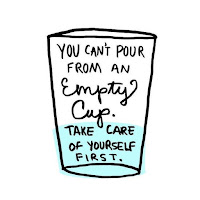
We can only manage so much at one time and our problems keep refusing to get in line so we are stressed... which means we all need to focus on self care.  So pause right now and ask yourself, "what do I need in order to have a better day today?" and then do it.  It might not make it a great day, but if it helps make your day at least a little bit better then it is a step in the right direction towards taking care of you.

Sunday, December 12, 2021

Holistic Admissions

When we talk about college admissions and how each individual college has their own set of standards and goals for who they will accept you will often hear the phrase "holistic admissions" tossed around.  I am not sure if you know exactly what that means...

Essentially, holistic admissions means that the colleges are looking at you (the applicant) as a whole person rather than just looking at your grades and test scores and making a decision.  There are a lot of factors that can be considered as a part of a holistic admission review and they will vary on the level of importance and weight that they are given depending on the college and their priorities.

On this page of the WKHS Counselor website we highlight some of the various aspects that colleges may take into account as a part of their holistic admissions review.  But the one thing I want to remind you about admissions is that this is NOT a reflection on who YOU are as a person.  If you are not accepted to a college, it simply means that they didn't have enough seats to allow you to join their incoming freshman class - it doesn't mean that there aren't other options out there which could be viable alternatives nor does it even mean you wouldn't have been successful at that school had they had enough room to admit you.  So know that you have done your best and then try to relax and trust that you WILL find the college which is a good fit for you to attend in the future.

Saturday, December 11, 2021

College Admissions Decisions


College admissions decisions are already starting to come in for many students (including OSU's first round of early action notifications which were released yesterday afternoon). Every senior looks forward to receiving their college acceptance letters. It is an exciting time and reassures that there is more to look forward to beyond high school. Depending upon the schools where you are applying, it is possible that you will hear back quickly or you may be waiting until sometime in March to find out if and where you have been accepted. 

I do ask that as you begin receiving your acceptance or, sadly, even rejection letters, to please keep me informed about the decisions. For the vast majority of the colleges, the only way I know about your admissions decision is if you share the information with me.

Also, remember, the only way to receive an acceptance letter is to actually APPLY to the college! (Just a friendly little reminder for those of you who are still struggling to get your applications finished and submitted.)

Thursday, December 9, 2021

Volunteer - Do Something

Do Something, a non-profit organization dedicated to empowering teens to participate in community service.  Volunteering has many benefits - not only to those who are helped by your acts of service, but also for you as well.  In the past the Do Something organization surveyed admissions officers of top colleges and universities in the United States. The purpose of the Community Service and College Admissions Survey was to understand the importance of community service in the college admissions process. As you can probably guess, the reality is that the admissions officers like to see community service. Here is what they wrote about the top five findings found in the survey.

Passion and Consistency Valued Most
When asked, “Which would you value more: four years volunteering at a local community center or one month helping orphans in Somalia?” 100% surveyed chose four years at a community shelter. This response indicates passion and consistency hold much higher value than a smaller, even more intensive program. This theme is reiterated in the entire study.

Time Spent Worth More than Money Raised
When asked, “Which would you value more: raising $100,000 for the homeless or spending a summer working at a homeless shelter?” 68% surveyed valued time spent over money raised. While raising such funds is admirable and impressive, time spent indicates the universality of volunteerism. Anyone can find a homeless shelter where they can volunteer, but not everyone has the ability to ask for money. Admissions officers “get it.” They are looking for evidence of actual service, not the ability to connect with wealthy people.

Community Service Ranks Fourth Amongst Valued Criteria
When asked to rank GPA, SATs, legacy, reference letters, extra curricular activities, and community service, 37.5% surveyed ranked community service fourth. While GPA and SATs are obviously the most valued criteria, community service ranks higher than then legacy and reference letters. Quite simply, hard academic numbers remain the most standard and significant factors of getting into a top college, but community services are noted and valued experiences.

Organizational Affiliations Don’t Matter
When asked, “Does being a member of a service organization like the Boy Scouts have more or less weight than an unaffiliated student volunteering?” 84% surveyed gave no weight to such affiliations. One admissions officer noted, "Service is service, that’s always a good thing."

Tell Your Story Well
When asked to list the three words admissions officers most like to see when students describe their community service, the most recurring words were “commitment,” “passionate,” and “dedication.” When asked to list the three words admissions officers least like to see, most recurring were “required,” “mandatory,” and “tedious.” Therefore, when describing community service, it should include positive and encouraging descriptors, rather than words of obligation.

So, if you are thinking about the volunteering, I would encourage you to get involved and help make a difference!  It will make a difference in the community and it can even benefit your future college applications.